
The Value of Combine Harvesters in Agriculture
Harvesting is the final field operation in a crop's production cycle. This operation is very important and quite delicate, as it can lead to enormous losses.
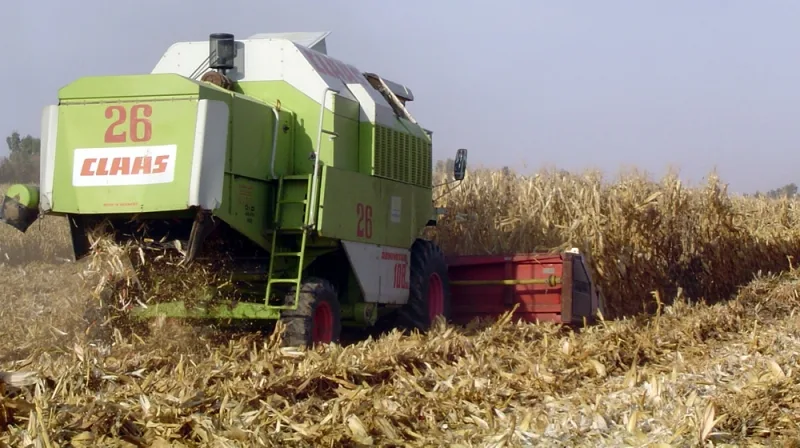
Harvesting is the final field operation in a crop's production cycle. This operation is very important and quite delicate, as it can lead to enormous losses, sometimes up to 80% of production. Factors such as grain maturity, grain moisture content, and poor machine settings all play a role. Cereals are therefore the most sensitive to harvest conditions. The combine harvester serves as a multi-functional piece of equipment that, while reducing the physical strain of harvesting, also brings major time savings by combining several operations into one.
The steps of harvesting/threshing
- Reaping: cutting the straw;
- Threshing: separating the grain from the ear;
- Cleaning: separating the grain from the straw and other impurities.
Harvesting efficiency
This is measured in terms of power output and the combine's working rate.
1. Power
The power used is around 20 hp per meter of cutting width for a towed machine driven by a PTO shaft, with a 30 to 40 hp tractor. For self-propelled machines...
2. Throughput
For an operating speed of 1 to 5 km/h, average capacities range from 15 to 40 quintals/h. These rates vary depending on working conditions, standing crop yield, available power, cutting width used, and field layout.
Would you like to invest in agriculture? Don't hesitate to contact us. We offer support services to help you carry out your agricultural projects.

Comments (0)
No comments yet. Share your experience or ask your question.