
Snail Farming in Cameroon: An Income-Generating Activity
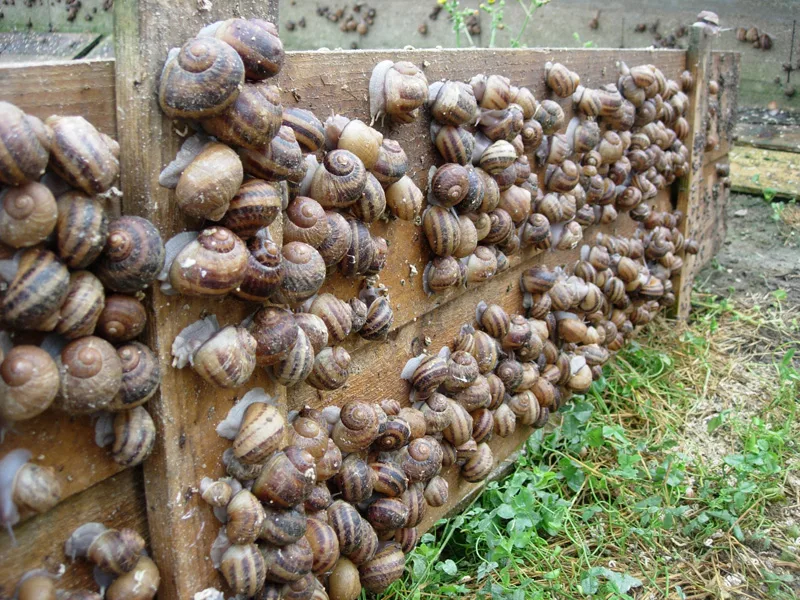
Heliciculture, or snail farming, in Cameroon and elsewhere is a recent discipline in livestock farming. In the past, gathering snails in the wild was the only way to supply this sector...
Contents 4
Heliciculture, or snail farming, in Cameroon and elsewhere is a recent discipline in livestock farming. In the past, gathering snails in the wild was the only way to supply this sector. Nowadays, progress has been made in farming to domesticate this species.
OVERVIEW OF HELICICULTURE
Giant African land snails (achatines) are sensitive to humidity (moisture in the air), light, and temperature: three factors that are essential during the breeding and nursery phases. This is an activity requiring adequate labor, particularly due to the constant monitoring these factors require.
Snail farming in Cameroon and everywhere else: What you need to know
What land should you choose?
- Farming can be done partly off the ground indoors, with outdoor pens.
- The outdoor pen can be 500 m² (for producing one tonne of snails) and must be fitted with an electric fence.
- It's advisable to use existing buildings to keep costs down; you can also build the outdoor pens yourself to save money.
- Plan for a processing facility if needed (it's also possible to rent pre-equipped processing facilities).
- Choosing the land is essential: choose a fairly humid area, ideally at a bit of altitude.
- A natural water source or water supply: snails need water and misting at certain times.
- A snail "herd."
- A feed stock: leftovers from vegetable growing or flours (corn, wheat, barley, soybean, etc.), calcium. It's estimated that 2 kg of feed is needed to produce 1 kg of snails.
Some market outlets for the industry
- Selling the flesh, slime, shells, and young snails to other farmers;
- A kilogram of fresh snails costs an average of 5,000 F
- A kilogram of dried snails costs 20,000 F
- A liter of snail slime costs 35,000 F
- Possibility of processing into several by-products (soaps, toilet milks, powder made from snail shells, and cosmetic products).
NOTE: DEMAND IS VERY STRONG AND EXCEEDS SUPPLY, AND THIS SECTOR OFFERS THE POSSIBILITY OF GETTING STARTED WITH A LIMITED BUDGET.
Snail farming training

(Yaounde, Cameroon, July 02 to 03, 2022)
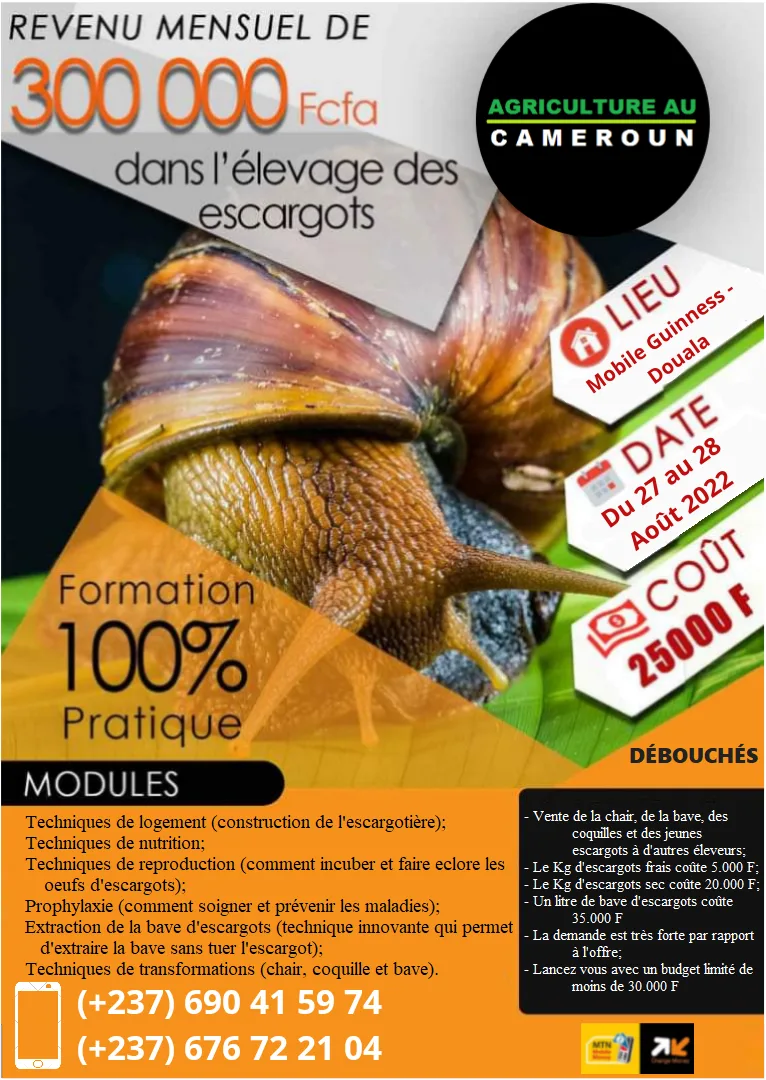
(Douala, Cameroon, August 27 to 28, 2022)

Comments (0)
No comments yet. Share your experience or ask your question.