
Growing Solo Papaya: High Value-Added Agricultural Potential
The papaya tree is native to tropical Central and South America. Its scientific name is Carica papaya L., and it belongs to the Caricaceae family.
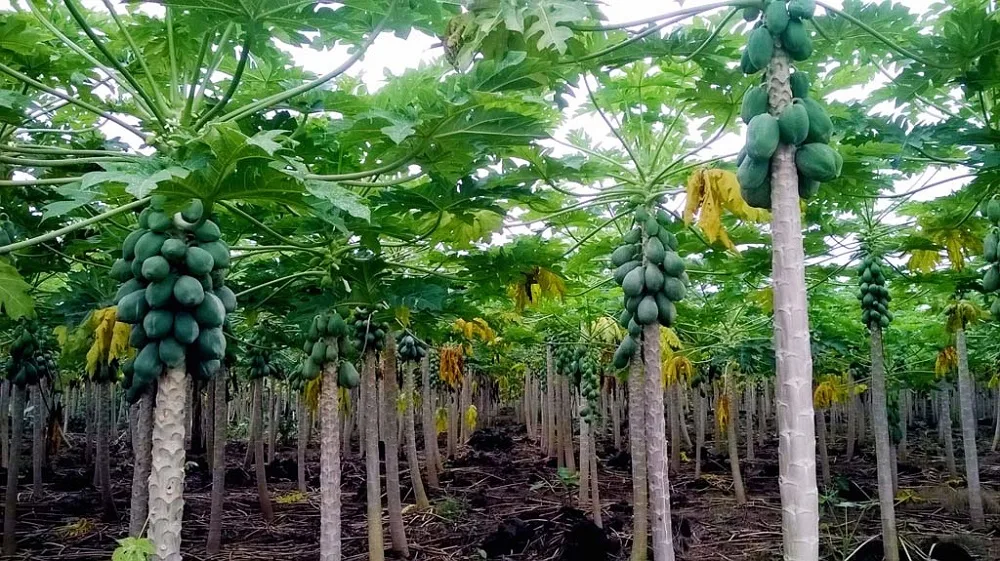
The papaya tree is native to tropical Central and South America. Its scientific name is Carica papaya L., and it belongs to the Caricaceae family.
In Cameroon, as elsewhere, papaya is grown for its fruit, whose flesh is eaten as a dessert or in a fruit salad mixed with other fruits. Unripe, it can be eaten as a gratin or in a salad. It is prized for the digestive benefits of its fruit and the medicinal properties of its leaves. Its high productivity makes it a profitable crop for farmers.
Technical Factsheet: How to Grow Solo Papaya
In reality, papaya only has regional and temporary types. Among those that have undergone fairly advanced selection is the Solo type, which we'll cover in this technical factsheet.
II. Growing requirements
II.1. Soil
To produce well, it needs light, well-drained soil that is very rich in organic matter. Planting on heavy, flooded soils should therefore be avoided.
II.2. Climate
The best climate for papaya is a hot climate with an average temperature of about 25 degrees C, without large fluctuations. Papaya needs rainfall of between 1,500 and 2,000 mm per year, well distributed. So to keep production going during the dry season months, irrigation should be used if needed to reach a total of 150 to 200 mm of water/month.
III. Growing techniques
III.1. Soil preparation
Soil preparation operations begin in January-March. You need to:
Clear and thoroughly clean the site, removing as much shade as possible.
Stake out and dig holes at a spacing of 2.5 x 2 m, i.e. 5m2/plant, digging holes 30 x 30 x 30 cm or 40 x 40 x 40 cm.
Apply a base fertilizer of compost or animal manure mixed with topsoil, at a rate of 20 to 30 tonnes/ha, i.e. 200 to 300 sacks of 100 kg, which comes to adding 10 to 15 kg of organic matter per hole.
III.2. Sowing
III.2.1. Nursery
Papaya seed refers to the black seeds found inside the fruit. The papaya tree is dioecious and polygamous, with three sexual types; these seeds therefore produce three types of plants:
Male plants (flowers with stamens), which don't bear edible fruit;
Female plants (flowers with pistils), bearing roughly spherical fruit generally suitable for export;
Hermaphrodite plants, which are bisexual. Their pear-shaped fruit is the most sought after on import markets.
III.2.2. Managing the nursery
Build a sturdy shade structure, well protected from domestic animals;
Fill clear plastic bags with soil rich in organic matter (it's best to run the nursery in pots), adding chicken droppings;
Sterilize the contents of the bags with a fungicide-insecticide mix (Dursban + Benlate), and wait 5 to 6 days.
The day before sowing, put the seeds in clean water, and after 24 hours keep the seeds that have settled at the bottom of the container;
Place 3 to 4 seeds evenly across the surface of each bag, pressing them in lightly;
Water every day. Seeds start germinating on day 10, at the latest by day 14;
2 weeks after sowing, set out bait against slugs (using Temik mixed with kitchen scraps, papaya, or banana), placed in small piles every 6 m2.
III.3. Transplanting
At the start of the rainy season, in April-May, transplant the seedlings once they are between 40 and 50 cm tall. Cut open the polyethylene bags without breaking up the root ball or damaging the roots. Plant so that the plant sits on a mound, to prevent water from pooling at its base.
-Planting density: 2,000 plants/ha, with a spacing of 2.5 x 2 m
-Seed quantity: to plant one hectare of papaya, about 100 to 150 g of seed is needed for the nursery.
Cycle length: production begins 10 months after planting, and papaya trees produce a useful harvest for 3 to 4 years. A papaya tree can live for up to 10 years.
III.4. Maintenance
Maintenance mainly consists of regular manual weeding, especially during the first 3 months after planting. Mild herbicides (gramuron, gramoxone) can be used after the 3rd month. Thin out the plants, removing the males.
III.5. Fertilization
After digging the holes, mix in 15 to 20 kg of compost along with 100 to 200 g of phosphates: this makes up the base fertilizer. Maintenance fertilization involves applying at least 20 kg of compost per tree per year.
The compound fertilizer type closest to papaya's needs is ...
I.1. Plant protection
Papaya is attacked by many pests (insects, nematodes, fungi, viruses). The most significant is mosaic virus, against which it's recommended to use ...
I.2. Harvest
I.2.1. When to harvest?
Harvesting can begin from the 10th month after planting, and continues year-round. The papaya tree flowers continuously, which is why the harvest is also continuous. Peak production is reached between months 11 and 12. It declines steadily during the height of the rainy season (July-August).
This drop in production is explained by fewer flowers being produced in December-February due to dry conditions, which is reflected in July-August. However, this can be corrected by applying water during the dry season and maintaining mulching.
I.2.2. What are the yields?
60 tonnes/ha in year 1, 75 to 80 tonnes/ha in year 2. A tree can produce 30 to 50 fruits/year, and harvesting can continue for 3 to 5 years depending on how well the plantation is maintained.
Would you like to invest in agriculture? Don't hesitate to contact us. We offer support services to help you carry out your agricultural projects.

Comments (0)
No comments yet. Share your experience or ask your question.