
How to Use Chemical Fertilizers Effectively for Better Yields
Before considering applying mineral fertilizers, make sure you first use every available source of organic fertilizer, properly composted and fully decomposed.
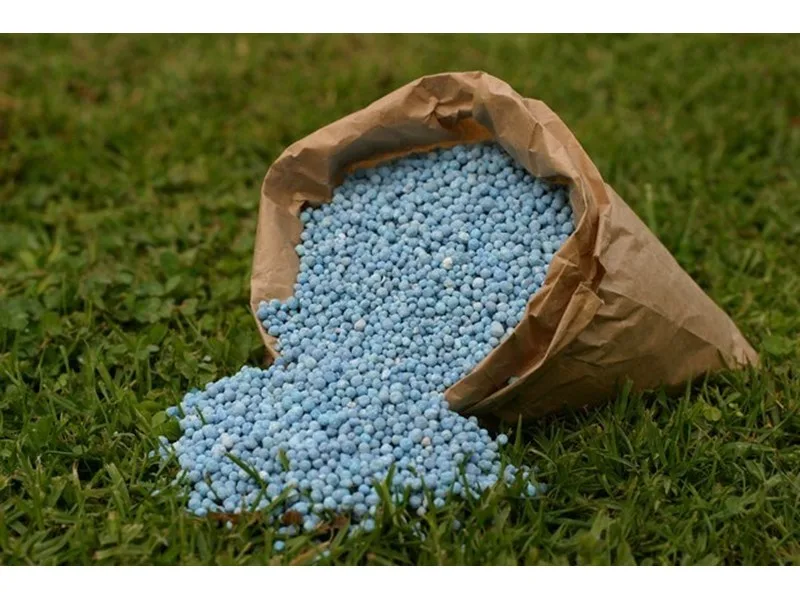
Before considering applying mineral fertilizers, make sure you first use every available source of organic fertilizer (plant residue, farmyard manure, compost, etc.), properly composted and fully decomposed.
As a result: applying organic fertilizers is the foundation for getting better results from mineral fertilizers in farming.
What is a mineral fertilizer?
A mineral fertilizer is an inorganic product applied to supply sufficient amounts of one or more nutrients essential to the plant. The common types are:
N fertilizers (Urea, Ammonium sulfate, Ammonium nitrate, etc.);
K fertilizers (Potassium sulfate, Potassium chloride, etc.);
P fertilizers (Triple and single superphosphate (TSP), etc.);
-NP fertilizers (Diammonium phosphate (DAP), etc.)
-NK fertilizers (Potassium nitrate, etc.) PK and
-NPK fertilizers (20-10-10, 14-24-14, 11-11-22, 12-06-20, 12-14-19, etc.)
-Foliar fertilizers.
Why is mineral fertilizer useful?
NB: Provided the basic rule is followed:
- Quickly meet plant needs for one or more nutrients
- Help improve crop yields
- Highly concentrated, so large quantities aren't needed
What are the drawbacks of inorganic fertilizers?
Despite the yield increases these fertilizers can bring, mineral fertilizers have drawbacks, including:
-Pollution of soil, surface water, and groundwater;
-Reduced food quality, with effects on consumer health;
-Reduced immune strength in plants and reduced market outlets for produce;
-Loss of capital (in case of misuse)
-Etc.
What are the bad practices when it comes to using chemical fertilizers:
Spreading fertilizers:
-That are not suited to our soils destroys them by acidifying them;
-That are not suited to the crop gives poor yields and poor-quality produce;
-In a poor way causes huge losses and pollutes the environment
How to properly use mineral fertilizers?
The four (04) "rights" rule:
-The right fertilizer, (what type of fertilizer does my crop need?)
-The right dose, (what dose is needed to reach my goal?)
-The right time, (at what point will the plant make best use of it?)
-The right method. (what's the best way to apply it for my crop?)
For soil-applied fertilizers.
Depending on the main nutrient
For N fertilizers, it's recommended to apply them in several split doses (about 2 to 4, depending on the crop), with amounts increasing as the plant develops.
For K fertilizers, which are moderately soluble and therefore moderately available, it's recommended to apply them in two splits, with a somewhat larger portion at the start of the crop cycle (about 60%), and the rest at flowering.
For P fertilizers, it's recommended to apply them in a single dose, at the start of the crop cycle, so they become available gradually as the plant develops.
Depending on soil type
-If the soil is very sandy (as in Toutsang, Falaise, Kekang, etc.), fertilizer should be applied in several splits, especially for N fertilizers.
-If the soil is very heavy (clayey), as in lowland areas, fertilizer should be applied in decreasing order of quantity: N, P, and K.
- If the soil tends to turn to dust when dry (Ndzih, Bansoa, etc.), fertilizer should be applied in decreasing order of quantity: N, K, and P.
- For leafy vegetables (cabbage, black nightshade, lettuce, etc.), more N fertilizer is needed, then K and P.
Depending on crop type
-For root or tuber vegetables (carrot, potato, beet, etc.), more K fertilizer is needed, then N and P.
-For fruit vegetables (tomato, bell pepper, chili, etc.), more K fertilizer is needed, then N and P
How to properly use foliar fertilizers
Basic rule: foliar fertilizers cannot provide complete plant nutrition. They are only useful for correcting deficiencies, when soil-applied fertilizer is no longer effective.
They should preferably be applied in the evening, with a sticking agent such as sweet potato leaves.
Recommendations for a few crops.
Applying the following recommendations should be based on the four-rights rule of fertilization.
-A few measurements:
-1 level teaspoon = 5 grams
-1 full beer bottle cap = 6 grams
-1 level tablespoon = 15 grams
-1 sardine can = 100 grams
-1 tomato can = 50 grams

Comments (0)
No comments yet. Share your experience or ask your question.