
Technical Factsheet: How to Grow Squash (Egusi/Pistache)
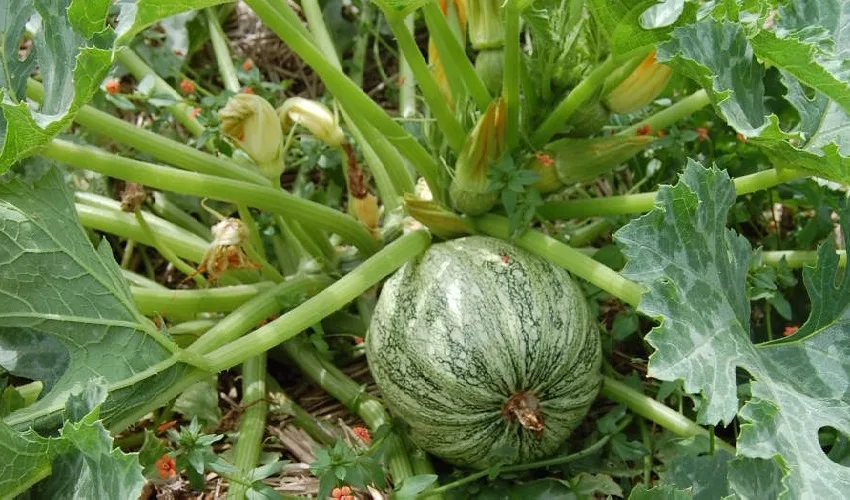
Pistache, also known as egousi or egusi in English, is the seed of a type of watermelon (squash).
Contents 4
Pistache, also known as egousi or egusi in English, is the seed of a type of watermelon (squash). In Cameroon, we loosely use the word cucumber to refer to the vines or plants grown for pistache seeds. French speakers use the word "pistache" for these seeds; English speakers use the word "egusi."
In this article, we'll cover growing squash. Here is a technical factsheet to help you succeed at growing this crop. Squash is a fruit/vegetable that can be grown in all our regions and only needs one thing: sun and water.
I- SETTING UP THE NURSERY FOR GROWING SQUASH
- Preparing a shaded nursery in the form of raised beds using light, well-loosened soil to fill the pots is the first step to success.
- Then add compost or well-dried chicken droppings to this soil. For example, to fill 28 pots, you'll need to add 2 kg of chicken droppings or manure mixed into the topsoil.
- Sow two seeds per pot, avoiding contact between the seeds and placing the tapered end of the seed facing down (2 to 3 cm between seeds), cover with a thin layer of soil about 0.5 cm thick, and lightly firm it down.
Water regularly, once a day.
NB:
- Note that about 200 m2 of nursery area and about 1.5 kg of seed are needed per hectare of planting.
- Germination occurs about 1 week after sowing.
- The seedlings stay in the nursery for 14 days, i.e. 2 weeks. After this period, the seedlings are ready to be transplanted.
II- TRANSPLANTING INTO THE FIELD
The plot is chosen even before setting up the nursery. Knowing in advance when the seedlings will be ready for transplanting, the key task is to make sure the plot is ready to receive them about a week beforehand. To achieve this, several operations need to be carried out:
- Clear the land,
- Dig holes 15x15x15cm on ridges for rainy-season growing, and 25x25x40cm for off-season growing.
- Keep a spacing of 1.5 m between rows, and 1.5 m between plants within the same row.
Add 1 kg of chicken droppings or well-decomposed manure and 2 teaspoons of potassium sulfate to each hole, and mix well with the soil.
After 1 week in the nursery, the seedlings are about 5 to 10 cm tall with 2 true leaves, and can be transplanted.
Transplanting should be done in cool weather, preferably in the afternoon from 4 pm onward.
Place one healthy seedling in each hole.
Then water generously.
With a spacing of 1.5 m x 1.5 m, an average density of 4,445 plants per hectare is achieved in a pure stand.
III- MANAGEMENT AND MAINTENANCE
These operations consist of watering, weeding and hoeing, applying fertilizers, and protecting the crop against diseases and pests.
a) Watering:
In vegetable growing in general, and pumpkin/squash production in particular, regular watering is needed, especially during the dry season, to keep the soil cool and moist but not waterlogged throughout the growing cycle. On the other hand, avoid very wet soil, which encourages Phytophthora, which can cause root and collar rot.
It's worth knowing that squash doesn't tolerate excess water, which can cause flowers and buds to drop.
Watering should be done daily or every two days during fruit swelling, since at this stage the fruits need a lot of water to develop properly.
b) Weeding and hoeing:
Squash copes very poorly with weed competition. That's why the field must be weeded and hoed frequently before the plants develop extensively. These two operations are essential for achieving good yields.
c) Fertilization
As the plants grow, their nutrient needs increase.
Since these nutrients must be available at specific times, split applications are strongly recommended to help the plants survive the vegetative and fruiting stages.
d) Plant protection treatment
| DISEASE | SYMPTOMS | PREVENTION |
|---|---|---|
| Anthracnose | Attacks young fruit and causes it to drop before ripening | Neem + Nordox |
| Aphids (Aphis gossypii) | Leaves slightly curled on the underside, which can lead to a risk of viral disease | -Neem - Garlic and chili juice |
| Leaf Miner Flies | White spots forming on the leaves | Fly trap + Neem |
| Caterpillars and Locusts | Present on the leaves | Neem |
| Powdery mildew (Erysiphe cichoracearum) | White powdery spots on both sides of the leaves | Avoid high humidity |
| Storage diseases: various rots | White or gray spots on fruit | Store properly on shelves in well-ventilated rooms |
| Small rodents | Gnaw fruit and seeds | Protect ripe fruit |
IV- HARVESTING AND STORING SQUASH (PISTACHE)
The first fruits are harvested about 12 weeks after transplanting, i.e. 3 months after sowing, and this harvest can last several weeks. Ripe fruits should be harvested with their stalk and in dry weather to ensure good storage, which can last several days when fresh. The yield is close to 30 tonnes per hectare.
Would you like to invest in agriculture? Don't hesitate to contact us. We offer support services to help you carry out your agricultural projects.

Comments (0)
No comments yet. Share your experience or ask your question.