
Intercropping Cocoa: A System Worth Promoting
Since the late 1980s, Cameroonian cocoa farming has faced low productivity in cocoa orchards, with average yields hovering around 260 kg of marketable cocoa/ha.
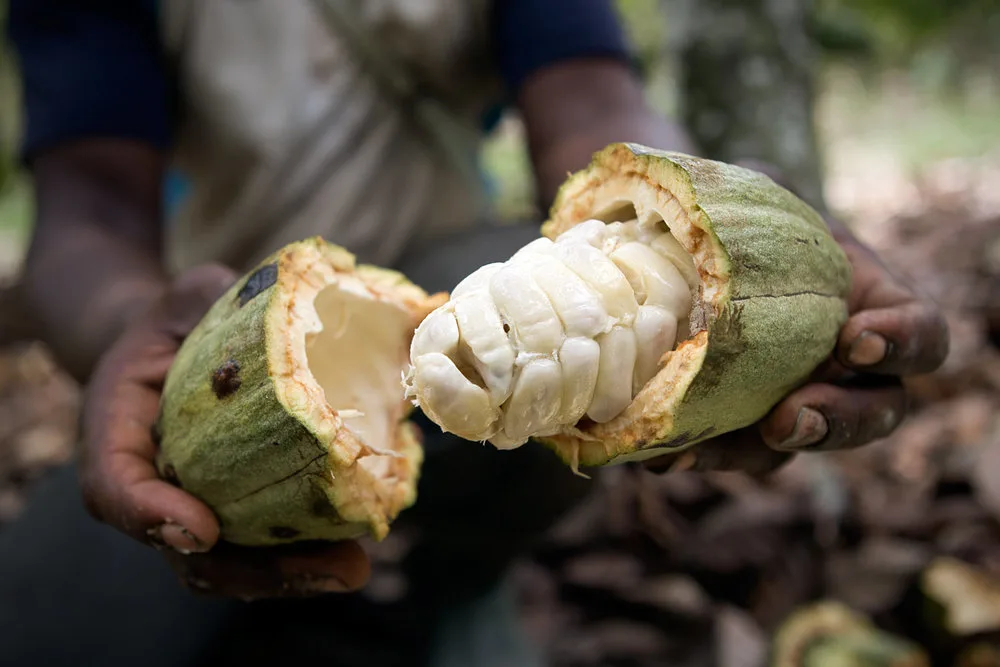
Since the late 1980s, Cameroonian cocoa farming has faced low productivity in cocoa orchards, with average yields hovering around 260 kg of marketable cocoa/ha, which is one of the causes behind producers' low incomes; the main reasons being that technologies developed by research often fail to meet producers' real needs, combined with low adoption of research innovations by farmers and almost no technical support on the ground to assist them.
In recent years, another blow has been dealt to this crop: fluctuating cocoa prices on the market, which has left producers disheartened and discouraged. It was in response to all this that IRAD, in partnership with CIRAD, developed innovative systems to not only make better use of space but also increase farmers' incomes. Two systems have thus emerged:
Intercropping cocoa with oil palm or coconut
In this system, the palm is planted at a spacing of 14m x 7.5m, and cocoa is planted between the palm rows at a spacing of 3m x 3m, with its first row located 4m from the palm row.
Intercropping cocoa with fruit trees
This system, however, involves a wide variety of species, ranging from citrus trees and large fruit trees to plantain. ALSO SEE: Technical factsheet for successfully growing cocoa
These systems, recommended for savanna areas, will, beyond their other benefits, help limit deforestation and thereby help reduce CO2 levels in the environment.
For more information on setting up these different systems, feel free to Contact Us!

Comments (0)
No comments yet. Share your experience or ask your question.