
Growing Rice: The Booming Rice Industry in Cameroon
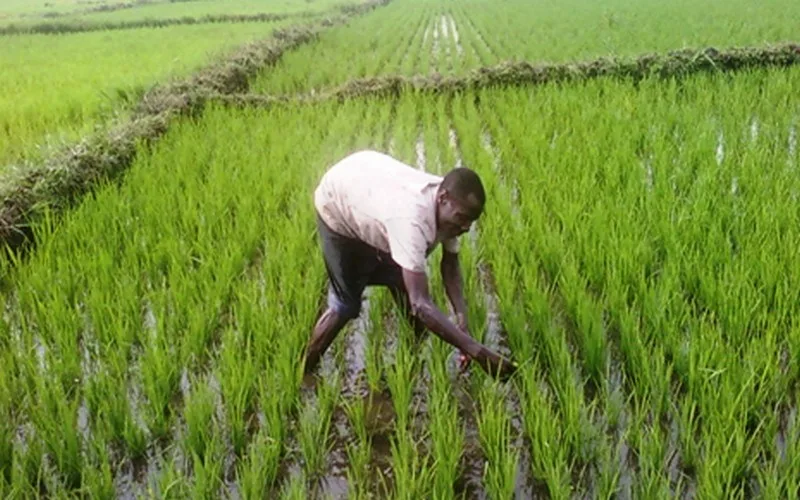
New rice varieties, such as Nerica, have been introduced in Cameroon since 2008, thanks to the Coalition for African Rice Development.
Contents 8
New rice varieties, such as Nerica, have been introduced in Cameroon since 2008, thanks to the Coalition for African Rice Development. These include, among others, the introduction of upland rice in forested areas (plains, lowlands, etc.) in the major basins that supply the two largest consumption centers (Yaounde and Douala), as well as support for irrigated rice growing in major zones such as the Far North and North-West, and plateau rice growing in Cameroon's West region.
Technical Factsheet: Growing Rice in Cameroon
Here is a short technical factsheet to help you get started and succeed at growing rice in Cameroon and elsewhere in Africa. We'll start with the soil preparation steps: clearing and plowing.
Clearing
Clearing can be done manually with machetes, or mechanically with a tractor.
Plowing
Mechanized plowing is preferred. A plowing depth of 20 to 30 cm is economically achieved using a tractor fitted with a disc plow.
Sowing in stations
Seed should be bought from the IRAD station in Dschang. This is the high-yielding NERICA 3 variety. The spacing used is 30cm x 10cm, giving 333,300 stations/ha. Seeds are sown at a rate of 7 or 8 per hole (4 to 5cm deep), dug with a stick. The station is then covered with soil. This type of sowing requires 40 kg of seed/ha. Sowing should be done as soon as the first rains arrive, i.e. around April 1st.
Maintenance
Plan for 2 to 3 weeding sessions per cycle. But since labor rarely manages to protect the crop through manual weeding in a timely way, we recommend chemical weed control (a selective pre-emergence herbicide) using atrazine, at a rate of 4L/ha; or Gramoxone before rice sowing and after weeds emerge, at a rate of 4L/ha.
Manual weeding is done using hoe-type tools. This process turns out to be both very physically demanding and very labor-intensive - up to 300 hours/ha. Manual weeding should take place 30 days after sowing.
Fertilization
Fertilizer application in rice farming is done in three rounds:
- First application: N.P.K. 20-10-10 fertilizer as a base fertilizer, 50 kg/ha;
- Second application: nitrogen fertilizer, UREA 50 kg/ha, after the 1st weeding;
- Third application: UREA 50 kg/ha after the 2nd weeding.
Plant protection
Many insects can attack upland rice. The damage they cause is sometimes significant enough to warrant the producer taking action. Decis is used at a rate of 0.8L/ha, and Cypercal 50EC (0.8L/ha). These are the two insecticides used.
Harvest and handling
Technological maturity is reached when yellow coloring covers 2/3 of the length of the panicle's axis (rachis). At maturity, the grains have a moisture content of around 22%. Harvesting is done with a sickle (a tool fairly common in the region, made by local blacksmiths for harvesting millet and fodder), which saves time compared to harvesting with a knife. One person can harvest between 25-35 kg/hour.
-
Drying
Drying is a particularly important step for properly storing rice without problems. Sheaves from sickle harvesting should not be left on wet ground, as this risks grain germination.
-
Threshing
Once the rice is harvested and dried, the panicles need to be threshed. A thresher is more practical and economical for this.
-
Winnowing
The rice then needs to be winnowed to remove debris and stones. The resulting paddy is sun-dried to 12% moisture (over 4 days).
Would you like to invest in agriculture? Don't hesitate to contact us. We offer support services to help you carry out your agricultural projects.

Comments (0)
No comments yet. Share your experience or ask your question.