
Guide: Processing Cassava into Starch
In Cameroon, cassava plays a very important role in the diet of many households. There are several processing options that help extend storage life.
Contents 8
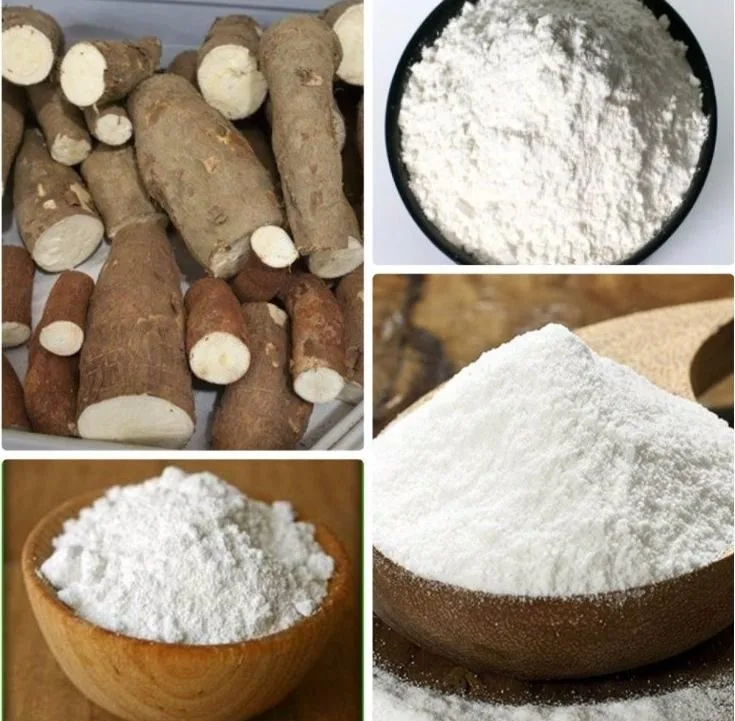
In Cameroon, cassava plays a very important role in the diet of many households. There are several processing options (tapioca, bread flour, chips, etc.) that help extend storage life and, in turn, cassava availability. In this blog post, dedicated to cassava processing, we'll give a few examples of methods for making cassava-based products, particularly starch, which may inspire anyone wanting to get into this field.
Technical Factsheet: Processing Cassava into Starch
Processing cassava into starch requires a series of steps, each just as important as the next. In this article, we'll show you how to successfully produce starch.
1). Cleaning the tubers
Freshly harvested tubers are cleaned and peeled. This washing can be done by hand or by machine.
2). Disintegration
The pulp obtained after peeling is broken down to release the starch granules. This is done using a machine fitted with a saw and brushes.
3). Screening (filtering)
Here, the grated pulp is passed through a series of screens of increasing fineness, the first retaining coarse pulp and the others fine particles. The final product that passes through the last screen is starch milk.
ALSO SEE: How to process cassava into quality flour
4). Settling the starch
The starch milk is left to settle in containers.
5). Washing the starch
After settling, the water is drained off and the remaining starch is washed by adding clean water. The added water is then drained off again, leaving clean starch. This clean starch, also called a "cake," has a moisture content of 35-40%.
6). Drying the starch
The cake is broken into small pieces and dried to a moisture content of 15 to 20%. Drying can be done in the sun or using a drying machine.
7). Milling and packaging the starch
After drying, the coarse starch is crumbled or ground to obtain fine particles. The final product is then packed into bottles, drums, paper, or plastic, which are then labeled.
Would you like to invest in agriculture? Don't hesitate to contact us. We offer support services to help you carry out your agricultural projects.

Comments (0)
No comments yet. Share your experience or ask your question.